
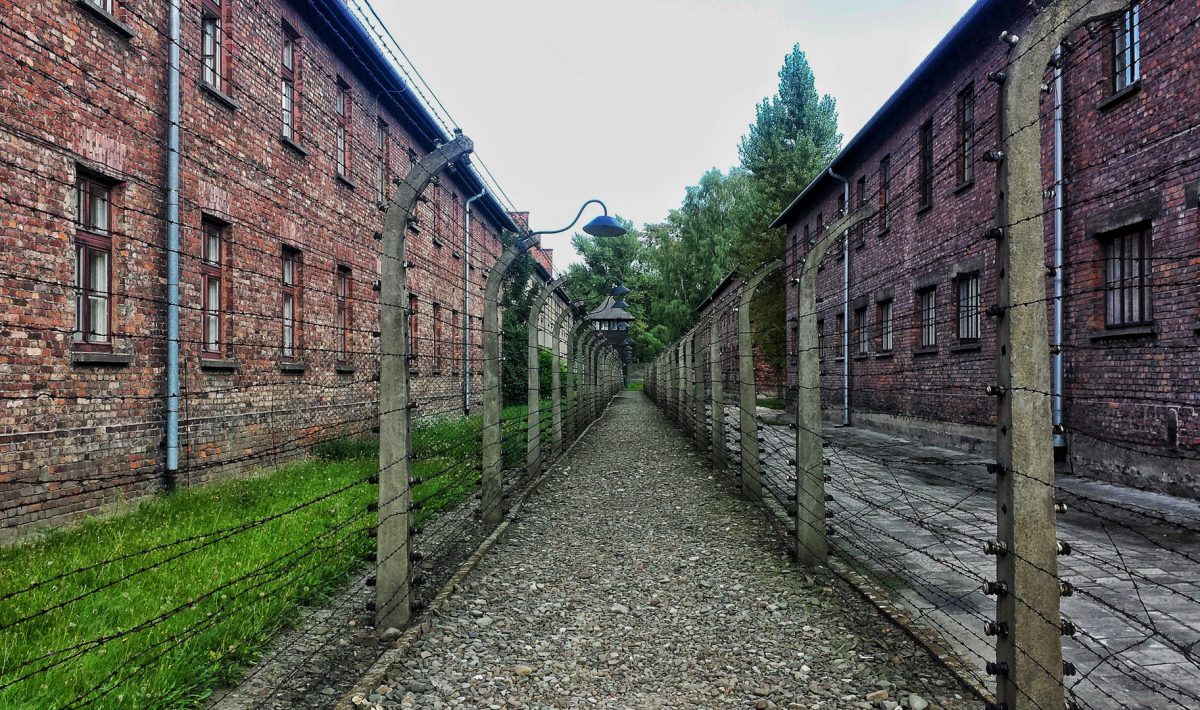
Auschwitz-Birkenau was the largest concentration and extermination death camp established by the German Nazi regime and it has now become the symbol of Holocaust. It consisted of 3 main camps: Auschwitz I, the administrative centre of the complex; Auschwitz II (Birkenau), an extermination death camp and Auschwitz III (Monowitz), a labour camp. The first two were featured in the first World Heritage List.
Created formally as a concentration camp for Polish political prisoners and soldiers, it became in fact the centre for the extermination of the most of European Jews. The exact number of people exterminated in Auschwitz is not known. The camp commandant, Rudolf Höss, testified at the Nuremberg Trials that 3 million people had died there during his stay as a commandant. The death numbers given by the Soviets was 4 million people. The Auschwitz Museum revised these figures in 90’s, and new calculations now place the figure at 1.1-1.5 million with about 90 percent of them being Jews from almost every country in Europe, including Poland, Czechoslovakia, Germany, France, Holland, Belgium and many others. The remaining 10% were mainly Poles, Gypsies and Russian soldiers. Most of the dead were killed in gas chambers using Zyklon-B; other deaths were caused by starvation, forced labour, plenty of diseases, executions and different medical experiments.
Evidence regarding Auschwitz reached the Allies during 1941-1944, but the allegations of mass killings were generally dismissed as exaggerations. This changed after the detailed report given by two escaped prisoners, which finally convinced most leaders of the truth about Auschwitz in the end of 1944. In an attempt to cover their crimes from the advancing Soviet troops, the Nazis detonated the gas chambers of Birkenau in November 1944 and in January 1945 they started to evacuate the facility. Most of the Jews were forced on a death march West. Those too weak to walk were left behind; about 8,500 inmated were freed by the Red Army.
A few years after WW II the Polish government restored Auschwitz and transformed it into a museum which you can visit during Krakow to Auschwitz Tour.
Departure point: Krakow hotel pick up
Departure dates: Daily (except January 1, December 25 and Easter Sunday)
Tour duration: 9am – 4pm
Price:
2-5 persons – 199zl/ per person
6-8 persons – 169zl/ per person
Over 8 persons – price negotiable
If you travel alone you can join a group tour, so don’t hesitate to get in touch with us!
Transport:
Private transport guaranteed for a group of over 3 persons.
1-3 persons – transport in a comfortable van with maximum 3 other passengers.
Inclusions:
- Comfortable, air-conditioned VW Sharan, VW Caravelle or VW Transporter vans
- All entrance fees
- 15-minute documentary screening
- English speaking guide
- Guided Tour of Auschwitz Museum
- Guided Visit to Birkenau Museum
Booking details:
- After arranging tour details, confirmation via e-mail will be sent.
- Payment in cash to our representative after the tour.
- All currencies are accepted.